
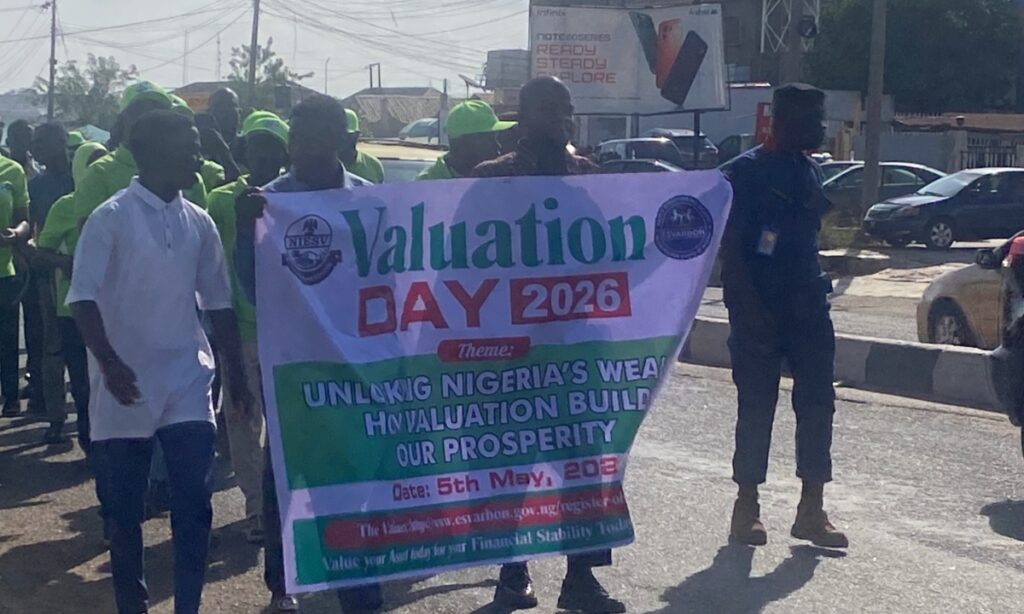
The Chairman of the Osun State branch of the Nigerian Institution of Estate Surveyors and Valuers (NIESV), ESV Olusola Jibril Adebiyi, has called on government authorities to urgently address the growing problem of land grabbers, commonly known as “Omo Onile”, in the state.
Adebiyi made the appeal while speaking with journalists during activities marking the NIESV 2026 Valuation Day in Osogbo on Tuesday. This year’s theme was “Unlocking Nigeria’s Wealth: How Valuation Builds Our Prosperity.”
He said both the federal and state governments need to introduce stronger laws and policies to control the activities of land grabbers, especially in urban and developing areas.
According to him, land disputes often begin from old government land acquisitions where compensation was paid to original landowners many years ago. He explained that problems arise when descendants of those families later return to claim ownership of the same land.
He said, “The younger generation of those families often come back to claim land that was already legally acquired by the government from their parents or grandparents.”
Adebiyi added that the situation has now grown worse, with some individuals invading building sites and demanding illegal payments from developers and investors before construction can continue.
He stressed that only strong legal action can stop the trend and restore order in land transactions. He also urged traditional rulers and community leaders to play active roles in controlling such activities within their areas.
“We need government intervention at both state and federal levels. Proper laws must be made to stop this practice and reduce the problem in our society,” he said.
“Traditional rulers and community leaders also have a responsibility. If they work with government, this issue can be greatly reduced,” he added.
Speaking on the purpose of Valuation Day, Adebiyi said the event is meant to educate the public on the importance of using certified estate surveyors and valuers when dealing with property matters.
He expressed concern that many people still prefer to hire unqualified agents instead of trained professionals.
He explained, “This programme is to help the public understand the difference between trained professionals and unlicensed agents who operate illegally.”
He warned that anyone not registered with the Estate Surveyors and Valuers Registration Board of Nigeria (ESVARBON) is not qualified to carry out valuation work, regardless of their level of education.
“Even lawyers are not exempt. If you are not licensed by ESVARBON, you are not qualified to practice valuation,” he said.
The immediate past chairman of Osun NIESV, ESV Adedoye Adekunle, also spoke at the event, saying Valuation Day is held annually to highlight the importance of professional estate surveyors in property management.
He noted that the profession helps reduce illegal practices and prevents exploitation in the real estate sector.
Adekunle explained that estate surveyors and valuers are different from ordinary estate agents because they are properly trained, certified, and regulated.
He warned that any professional who violates ethical rules risks losing their licence and official approval to practice.
Also speaking, Dr. Olusegun Omisore, Director of Lands at the Osun State Ministry of Lands and Physical Planning, said poor land record-keeping remains a major challenge in the valuation sector.
He explained that accurate valuation depends on proper data, but the lack of a reliable database often leads to inconsistent property assessments.
Omisore also pointed out weak enforcement of professional rules, corruption, and political interference as major issues affecting land administration and valuation practices in Nigeria.