
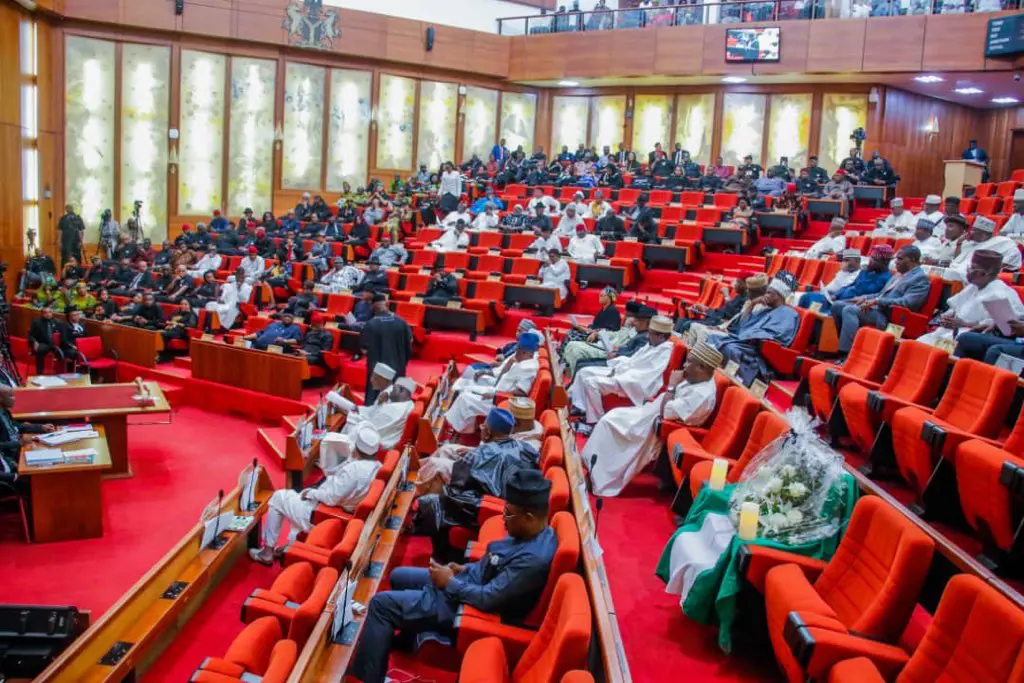
The Nigerian Senate on Tuesday took major steps toward creating a new legal system to regulate virtual and digital assets in the country, while also calling for urgent efforts to bring back the nation’s collapsed textile industry.
The digital assets bill, sponsored by the Deputy Senate President, Barau Jibrin, passed second reading during plenary after it received full backing from senators.
Presenting the lead debate on his behalf, Senate Chief Whip Mohammed Tahir Monguno explained that the bill is aimed at setting clear rules for virtual currencies and digital asset service providers operating in Nigeria.
He noted that Nigeria is already one of the biggest users of digital assets in the world, but still operates without a strong legal structure to guide the fast-growing sector.
According to him, technologies like cryptocurrency and blockchain-based systems have become part of modern finance, but regulation has not grown at the same pace.
“While innovation in this space has grown rapidly, the laws to manage it have not kept up,” Monguno said. “This bill is meant to close that gap and protect both the public and the financial system.”
After discussions, senators unanimously supported the bill and sent it for further legislative review.
In a related development, another bill sponsored by Barau Jibrin — the Nigeria Communications Commission (Amendment) Bill, 2026 — also passed its first reading.
The Senate also adopted a separate motion urging the Federal Government to take immediate steps to revive Nigeria’s struggling textile industry, which lawmakers said has been in decline for years.
The motion was presented by Senator Sunday Marshall Katung and supported by Barau Jibrin alongside other lawmakers.
During the debate, Barau said the collapse of the textile industry has led to massive job losses across the country and weakened the economy.
“This issue affects the wellbeing of Nigerians and our national economy,” he said. “We have lost thousands of jobs and livelihoods because the textile sector has been allowed to collapse.”
He also warned that Nigeria’s heavy reliance on imported textiles is hurting local production and job creation.
“By importing almost all our textile needs, we are simply creating employment for other countries while denying Nigerians these opportunities,” he added.