
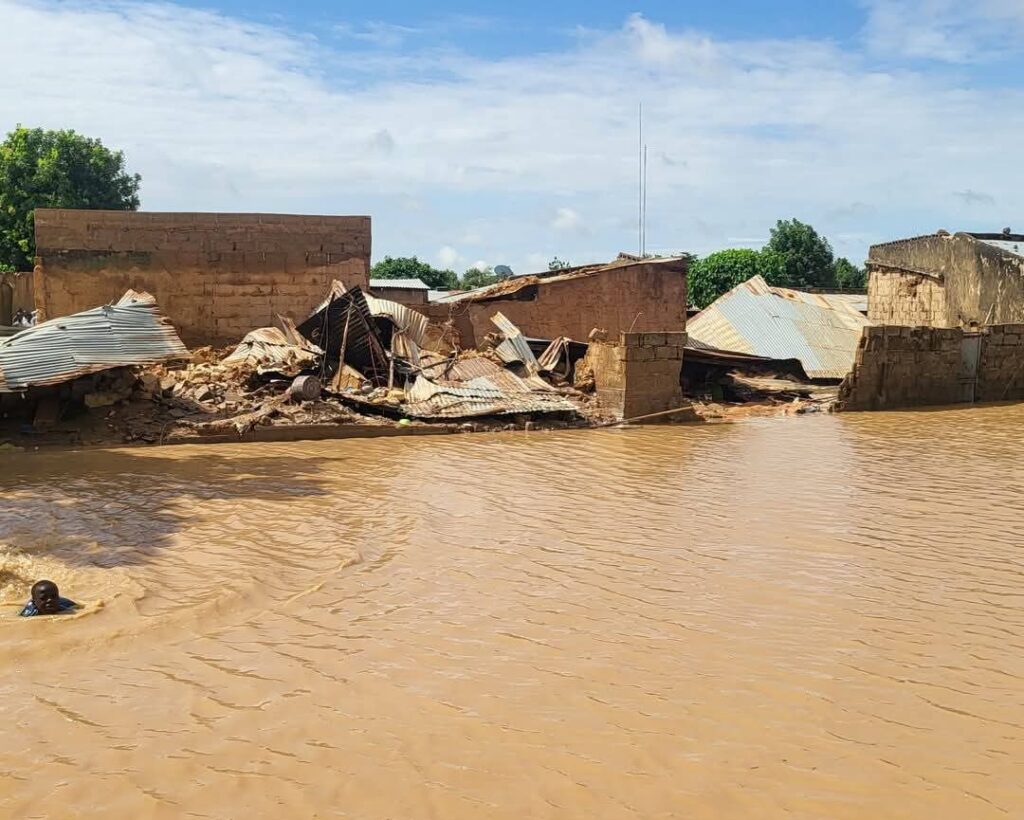
The National Emergency Management Agency (NEMA) has warned residents of Kebbi State to prepare for possible flooding and severe weather conditions as the 2026 rainy season approaches.
The alert was based on forecasts released by the Nigerian Meteorological Agency (NiMet) in its 2026 Seasonal Climate Prediction and the Annual Flood Outlook published by the Nigeria Hydrological Services Agency (NIHSA).
In a statement issued in Birnin Kebbi on Friday, the Head of NEMA’s Sokoto Operations Office, Tukur Abubakar, said Kebbi is among the states expected to face a high risk of flooding this year.
According to the agency, rainfall in the state is likely to be heavier than what was recorded in 2025, increasing the chances of flash floods in many communities.
NEMA explained that several parts of Kebbi fall under different flood-risk categories, including high, medium, and low-risk zones, meaning many areas could still experience flooding at varying levels.
The agency also warned residents to expect strong windstorms at the beginning of the rainy season. People living in riverine and low-lying areas were advised to stay alert and obey any evacuation instructions issued by authorities.
NEMA identified the period between July and September as the peak of the flood season. It said rising water levels around the Kebbi River could affect homes, roads, farmlands, and other public infrastructure.
The agency added that water levels may remain high even into October and November, while nearly 100 road sections across the state are at risk of being flooded.
Motorists were also cautioned against driving through flooded roads, as hidden damage to roads and bridges could lead to accidents.
Apart from flooding, NEMA warned that Kebbi may also experience a long dry spell between June and August, which could negatively affect farming and crop production.
Farmers were encouraged to adopt modern farming methods, including the use of drought-resistant and fast-growing crops, to reduce possible losses.
The local government areas likely to be affected include Arewa, Dandi, Aleiro, Kalgo, Bunza, Birnin Kebbi, Argungu, Augie, Jega, and Maiyama.
Residents were further advised to clear blocked drainage systems and waterways, avoid dumping waste indiscriminately, and move away from areas known to be vulnerable to flooding where necessary.
You May Like: Gov Uba Sani Commends NLC for Improved Partnership in Kaduna