
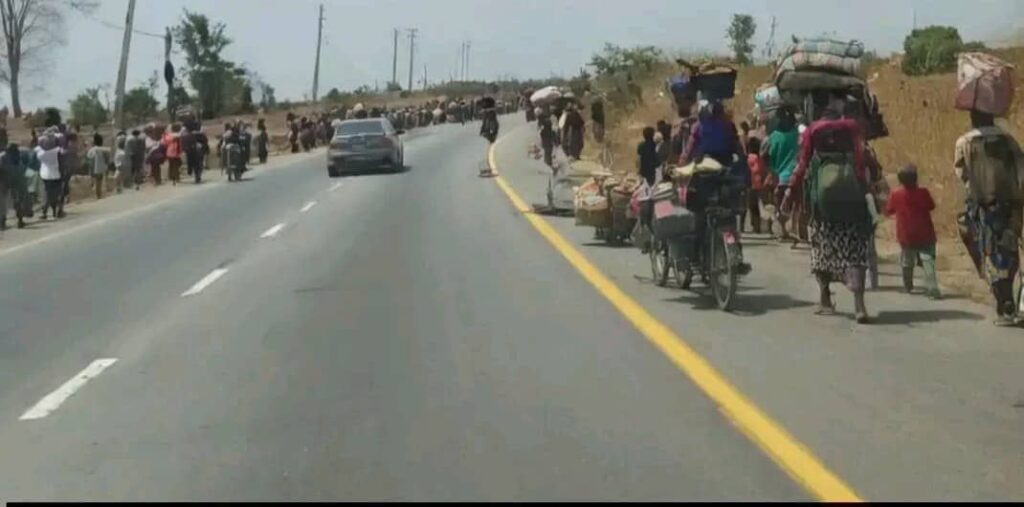
A fresh wave of concern is sweeping through communities in Odeni Gida Ward of Udege Development Area, Nasarawa Local Government Area of Nasarawa State, as displaced residents allege that those responsible for deadly attacks on their villages are now occupying the same territories they were forced to abandon.
What started as a violent assault that left scores dead and thousands displaced has, according to survivors, turned into a deeper crisis involving the loss of ancestral lands and prolonged displacement.
Months after the attacks, many affected families remain unable to return home. Residents say their houses were destroyed, farmlands deserted, food supplies looted and livelihoods wiped out in a wave of violence that claimed more than 80 lives across several settlements.
While officials in some quarters described the incident as a communal conflict, many victims strongly reject that narrative. They insist the attacks were carefully coordinated assaults carried out by heavily armed men who struck several communities at the same time.
For many survivors, the disagreement over how the violence is described goes beyond words. They believe the classification could affect justice, compensation, accountability and even future ownership of the affected communities.
During a recent visit to the area by the Senior Special Assistant to President Bola Tinubu on Community Engagement, Dr. Abiodun Essiet, residents reportedly raised fresh concerns over developments in the abandoned villages.
According to community members, several of the communities attacked remain largely empty because displaced residents are still afraid to return.
They further alleged that some individuals linked to the attacks are now openly grazing cattle and carrying out activities in the deserted areas without challenge.
Many residents see this as evidence that the attacks may have been aimed at taking control of their land.
One resident lamented that those who fled for safety are watching strangers occupy the communities they once called home.
Images and videos shared online have shown the extent of the displacement, with women, children and elderly residents seen carrying belongings as they fled their villages in search of refuge.
The situation has also generated frustration among affected communities, many of whom believe public attention is fading while insecurity continues.
Some residents accuse certain local leaders of weakening efforts to seek justice by participating in reconciliation meetings before displaced families were able to return safely to their homes.
Others criticised the way relief materials were distributed, arguing that victims and alleged aggressors were treated as though they shared equal responsibility for the violence.
Although peace meetings involving community representatives and Fulani leaders were held after the attacks, residents say there is little information about whether agreements reached during those discussions have been implemented.
Meanwhile, reports of attacks on farmers and continued threats in surrounding areas have continued to surface.
Public affairs commentator Yahaya Kana Ismaila argued that the violence bears the characteristics of organised armed attacks rather than a traditional communal dispute.
According to him, the affected Eloyi communities have no direct ethnic or territorial connection with the armed men accused of carrying out the attacks, making the communal conflict description questionable.
He maintained that attackers arrived in large numbers with sophisticated weapons, attacked multiple villages simultaneously, burnt homes and forced residents to flee.
Kana warned that the lack of arrests and accountability could worsen insecurity and encourage future attacks.
He noted that despite the high death toll and widespread destruction, many victims still feel abandoned and uncertain about their future.
According to him, homes, motorcycles, farm produce and years of hard work were destroyed, leaving many families struggling to rebuild their lives.
He added that repeated attacks linked to grazing disputes, kidnappings and farmland destruction have created fear across many rural communities in the state.
Residents continue to call on both the Nasarawa State Government and the Federal Government to intervene urgently.
Abdulwahid Angala Odeni, one of the affected residents, described the situation as heartbreaking, saying many families have become homeless while their communities remain under threat.
Another resident, Suleiman Otto Wakili, appealed to federal authorities to take immediate action, insisting that affected communities need protection and support.
As concerns grow, many displaced families are questioning the response of government institutions, security agencies and emergency management bodies.
Some also expressed disappointment over what they describe as inadequate humanitarian assistance despite promises of support for displaced persons.
For many victims, the central issue remains unresolved: they are still unable to return safely to their homes.
As uncertainty continues, residents say they are looking to the Federal Government for decisive intervention, fearing that without urgent action, entire communities could remain permanently abandoned.
For those still living in displacement camps and temporary shelters, one troubling question remains unanswered: if the original owners cannot return, who now controls the land they left behind?